
Love & Separation

Updated: Apr 7

This is the post about the relationships, and it's goal merging western & eastern psychology and my own experience. I think I have enough experience to write a post of this kind.
I have been in various relationships since I think I was sixteen, and eventually I was asking what is the purpose of all this - drama, emotional turmoil brought me to study various systems of thought and psychologies. And I want to share it here.

Anima & Animus
When I first time heard this words and this concept - it seamed very pleasant and romantic to me. In fact, then we first time encounter this forces - we realise their very destructive nature.
And if you are engaging in relationships, it is not possible to avoid them, as per my own experience. You can avoid them though, but if you avoid relationships - you are not developing, so the only way is to understand them.
Anima & Animus are the term coined by Swiss psychologist Carl Gustav Jung, which represent the irrational forces of our psyche. Until we meet someone we can say we love, these forces lie dormant.
We humans like to think, that we are consistent and mature, we have a free will and take a rational decisions. But when we fall in love - we call that some temporary madness overcame us. We were not ourselves. We like to think that at such moments some force is repressing our true character.
But let us think for a moment for an opposite possibility - in our conscious day-to-day life we are sleep walking , unaware of who we really are; we present a front of reasonableness to the world, and we mistake the mask for reality. When we fall in love, we are actually being more ourselves. The masks slips off. We realize how deeply the forces of unconscious determine many of our actions and choices. We are more connected to the reality of the essential irrationality in our nature.
Let's look at some of the common changes that occur when we are in love.
Normally our minds are in the state of distraction. The deeper we fall in love, however the more our attention is completely absorbed by another person. We become obsessive.
We like to present a particular front to the world -one that highlights our strengths. When in love however, opposite traits often come to the front. As adults we feel relatively mature and practical, but in love we can suddenly regress to behavior that can only be seen as childish. We experience fears and insecurities that are greatly exaggerated. Like a baby, we feel the terror of being abandoned.
Normally we like to imagine that we are the good judges of other's people charecter. Once infatuated or in love, we mistake the narcissist for a genius, the suffocator for a nurturer, the slacker for the exciting rebel, the control freak for the protector. And what is worse, we will often continue to make the same types of mistakes again and again.
When we look at these altered states, we like to call them some sort of possession. We are normally rational person A, but under the influence of an infatuation, irrational person B begins to emerge. At first A and B can fluctuate and even blend into each other, but the deeper we fall in love, the more it is person B who dominates. Person B sees qualities in people that are not there, acts in ways that are counterproductive or even self-destructive. Person B is quite immature, with unrealistic expectations, and makes decisions that are often mysterious later to person A.
When we want to understand what is going on, we can't really do it thoroughly - too much of our unconscious is at play and we don't have rational access to the process.
Carl Jung who analysed thousands of men and women with painful love stories - offered maybe the most profound explanation of what happens when we fall in love.
According to Jung we are actually possessed in such moment. He gave the entity (person B) that takes hold of us the name anima ( for the male) and animus (for the female).
We all possess hormones and genes of the opposite sex. These contrasexual traits are in the minority (to a greater or lesser extent, depending on the individual), but they are within us all and they form a part of our character. Equally significant is the influence on our psyche of the parent of the opposite sex, from whom we absorb feminine or masculine traits.
For example, according to Robert Green small boys are often comfortable expressing emotions and traits that they have learned from the mother, such as overt affection, empathy, and sensitivity. Small girls, conversely, are often comfortable expressing traits that they have learned from father: aggression, boldness, intellectual rigor, and physical prowess. Each child may also naturally posses these opposite - gender traits in him or her - self. In addition, each parent will also have a shadow side that the child assimilate or deal with.
Soon, however, comes a critical period in our early lives in which we must separate from our parents and forge our identity. And the simplest and most powerful way to create this identity is around gender roles, the masculine and the feminine.
The boy will tend to have an ambivalent relationship to this mother that will mark him for life. On one hand he craves the security and adoring attention she gives him; on the other hand he feels threatened by her, as if she might suffocate him in her femininity and he would lose himself.
He fears he authority and her power over his life. From a certain age forward, he feels the need to differentiate himself. He needs to establish his own sense of masculine identity. The other sides to his character - the empathy, the gentleness, the need for connection, which he absorbed from the mother or were naturally part of him - will tend to become repressed and sink into the unconscious.
The girl may have an adventurous spirit and may incorporate the willpower and determination of her father into her own personality. But as she gets older, she will most likely feels pressure to conform to certain cultural norms and to forge her identity around what is considered feminine. Girls are supposed to be nice, sweet, and deferential.
The unconscious feminine part of the boy and the man is what Jung calls the anima. The unconscious masculine part of the girl and woman are the animus. Because they are parts of ourselves that are deeply buried, we are never really aware of them in our daily life.
Our androgynous nature is represented by many mythologies, for example Shiva Ardhanārīśvara or Greek Dionysus.

There are many stories, where we can find the soul in her quest for union and wholeness.
For example, in "Twin Peaks" Agent Cooper is rational masculine soul of David Linch searching for his anima - Lora Palmer.
Then in "Ramayana" Rama is ordered masculine consciousness, ethical, disciplined, but initially incomplete. Capable of rule and clarity, yet cut off from inner feeling. Sita - anima, the inner feminine image in a man's psyche. She carries feeling, eros, intuition, meaning, and soul. When unconscious, she is projected, idealised, abducted, or demonised. Individuation requires finding, rescuing, and integrating her.
Abduction of Sita symbolises the moment a man loses contact with his inner feminine, life becomes dry, anxious or mechanical.
Ravana is Shadow Masculinity. Ravana is not "evil" psychologically, he is: inflated intellect, power without heart, masculinity cut off from anima. In Jungian terms, Ravana abducts the anima and turns her into a object - not a partner.
Hanuman - instinct redeemed. Hanuman represents instinct and vitality aligned with devotion, without instinct in your side, the anima cannot be found.
Then forest is removal from social persona, collapse of external identity - necessity to descent for inner work. The anima can only be found when projections onto society, status or achievement dissolve.
When we become fascinated with a person of the opposite sex, the anima and animus stir to life. The attraction we feel might be purely physical, but often than not - it is a psychological as well.
If the relationship to the mother or father was mostly positive, we will tend to project onto the other person the desirable qualities that our parent had, in the hope of re-experiencing that early paradise.
If the feelings toward mother of father were mostly ambivalent (their attention inconsistent), we will often try to fix the original relationship by falling in love with someone who reminds us of our imperfect parent figure, in the hope that we can subtract their negative qualities and get what what we never quite got in our earliest years.
If the relationship was mostly negative, we may go in search of someone with the opposite qualities to that parent, often a dark, shadowy nature.
In any case, whether the association is positive, negative or ambivalent - powerful emotions are triggered, and feeling ourselves transported to the primal relationship in our childhood, we act in ways that are often contrary to the persona we present. We become hysterical, needy, obsessive, controlling. The anima and animus have their own personalities, and so when they come to life we act as person B. Because we are not really relating to women and men as they are, but rather to our projections, we will eventually feel disappointed in them, as if they are to blame for not being what we had imagined. The relationship will often tend to fall apart from the misreading and miscommunications on both sides, and not aware of the source of this, we will go through the same cycle with the next person.
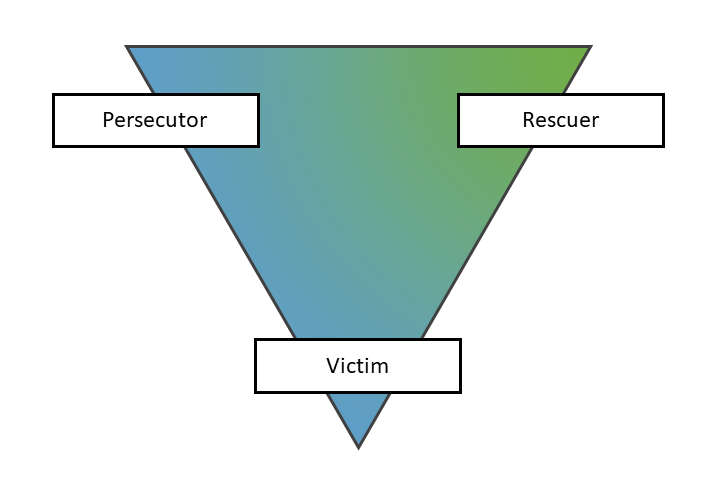
Anima / Animus are the inner “other” formed in childhood and projected onto partners in adulthood. When these inner figures are unintegrated, they drive drama, like Karpman roles, for example.
You don't need to be negative towards projection, but just become aware of it. Because without the projection would be no attraction to the other. But when we can learn how to distinguish the projection, we can start to actually discover the other person, but not our imagination of that person. Many relationship are fall apart, because people are rarely go into this stage, but tend to chase their illusion. In fact, one of the goals of the relationships is to discover this qualities what attract us in other person within. Integrating this qualities we gain a source of power and inspiration, and what Carl Jung would call Wholeness.
Relationships - Give and Take
If love is not an illusion, what it can be ? We can start question ourselves...
In fact love, is the creative force, which underlines all the Being, which emphasised by many spiritual teachers.
For example, Erich Fromm who was German-American sociologist and psychoanalyst calls love an Art. And to learn this art we have to practice it. It is an art of give and take.
Normally as was mentioned before we only imagine love as something happening to us, where we receive love and affection from other person, but we rarely think what we can give in return.

Our society thinks that problem of love is the problem of object - to love is simple, but to find the right object is difficult.
But in reality is the problem of development of faculty, and which needs to be practiced.
Learning of any craft or art is divided onto - learning of theory and mastering practice.
I shall become a master then results of my knowledge and practice are blended into one - my intuition, the essence of mastery of any art. But the most important is complete devotion to this art, make it the ultimate concern - there must be nothing else more important.
Erich Fromm cals immature form of love a symbiotic union.
Symbiotic union has its biological pattern in the relationship between the pregnant mother and the fetus. They are two, and yet one. They live "together" (sym-biosis), they need each other.
The fetus is receiving everything it need from her, mother its world, but also her world is enhanced by it.
In the psychic symbiotic union, the two bodies are independent, but the same kind of attachment exists psychologically.
The passive form of the symbiotic union is that of submission, or masochism.
Masochistic person escapes from aloneness, by making himself part of another person who directs, guides and protects him
Masochistic person does not have to take any decisions, any risks, another person is his life and oxygen. He is not yet fully born.
Active form is symbiotic fusion is domination or sadism
The sadistic person escapes from aloneness and sense of imprisonment by making another person part of himself, he inflates and enhances himself, by incorporating another person who worships him.
This two types depend on one another, can't live without each other. But they both have fusion without integrity.
In contrast to symbiotic union, mature love is union under the condition of preserving one's integrity, one's individuality. Love is an active power in man, which breaks through the walls, which separate man from his fellow men; love makes him overcome the sense of isolation and separateness, yet it permits him to be himself, to retain his integrity.
Paradox of love- two beings become one and yet remain two. - Erich Fromm
Love is activity, not a passive effect. It's standing, not falling.
In our society we consider activities such a doing business or making table, participating in sports or study medicine - something directed towards an outside goal to be achieved. What is not taken into account is the motivation of the activity. For example, men is driven to incessant work by a sense of deep insecurity and loneliness, or another driven by greed of money. The person is the slave of passion, and his activity is in reality a "passivity" because he is driven. He is a sufferer, not the "actor". On the hand, a man sitting in quite room contemplating with no purpose with the world - considered passive, however the meditation is the highest activity of the soul, which is possible under the condition of inner freedom and independence.
Symbol of Dao - represents the paradox of love.
It also represents the energy exchange - give and receive. We mostly focused on receiving love, but what about the other part - giving?
Giving sometimes misunderstood, like giving up, sacrifice.
The marketing character is willing to give, but only in exchange for receiving - and feels cheated giving without receiving.
But for a productive character giving has an entirely different meaning - its a highest expression of potency. In the very act of giving, I experience my strength, my wealth, my power.
Giving to our partner without waiting anything in return.
In the sphere of material things giving means being rich. Not he who has much is rich, but he who gives much.
In fact, giving is considered an upaya for Jupiter in Jyotish astrology - the planet responsible for knowledge and wealth. The ancient upaya was throwing gold into the river.
If you only accumulate wealth, the flow is stopped, so as the wheel of the Dao.
Hence, we can see that the ability to love as an act of giving depends on the character development as the person. What's developing the faculty of love, you are also stepping on the path of Individuation.
As per Fromm there are certain basic elements common to all forms of love - Care, Responsibility, Respect and Knowledge.
Care
Love is active concern for the life and the growth of that which we love. If we say that we love flowers, but forget to water them - that active concern is lacking, there is no love.
Responsibility
Today responsibility is often meant something like duty imposed upon one from outside. But responsibility in its true sense, is an an entirely voluntary act; its my response to the needs, expressed or unexpressed of another human being. Responsibility could easily deteriorate into domination without another component - respect.
Respect
Respect (respicere - to look at) the ability to see a person as he is, to be aware of his unique individuality.Respect the absence of exploitation and is possible when I achieved the independence, the ability to walk without crutches.I want the loved person to grow and unfold for his own sake, and in his own ways, and not for the purpose of serving me. If I love another person - I feel One with him, but as he is, and not as on object to use for my own sake.
Knowledge
To respect a person is not possible without knowing him; care and responsibility would be blind if they were not guided by knowledge. Knowledge would be empty if it were not motivated by concern. Knowledge which penetrates to the core - is an aspect of love -> only then I can transcend the concern for myself and see the other person in his own terms.
Knowledge has another very important aspect. The basic need to fuse with another person so as to transcend the prison of one's separation is closely related to another specifically human desire - to know the "secret of man". While life in its merely biological aspects is a miracle and a secret, man in his human aspects is a unfathomable secret to himself - and to his fellow men.
Erich Fromm also distinguish the following forms of Love:
-Brotherly Love
-Motherly & Fatherly love
-Erotic Love
-Self Love
Motherly & Fatherly Love:
At birth, the infant exists in a state of undifferentiated unity, experiencing warmth, nourishment, and security without recognizing them as coming from a separate source. Mother is not yet perceived as another person, but as part of the infant’s own state of satisfaction. This is a phase of primary narcissism, where reality exists only insofar as it meets inner needs. As the child develops, it gradually differentiates itself from the world, learning that objects, people, and the mother have an existence of their own. Through repeated experiences of care and response, the child forms the deep conviction of being loved unconditionally - loved not for doing, but for being. Early love is thus passive: the child is loved without effort or merit. Only later does a transformation occur, when love shifts from receiving to giving, from dependence to creative activity. Mature love emerges when the individual moves beyond egocentric need and discovers that loving - giving, caring, and recognizing the other - is more fulfilling than merely being loved.
Infantile love follows the principle: "I love because I am loved." Mature love follows the principle: "I am loved because I love." Immature love says: "I love because I need you." Mature love says: "I need you because I love you".
Motherly love by its very nature is unconditional, the relationship to father is quite different. Mother is the home we come from, she is nature, soil, the ocean; father does not represent any such natural home. Father represent other pole of human existence: the world of thought, of man-made things, of law and order, of discipline, of travel and adventure. Father is the one who teaches the child, who shows him the road into the world.
Fatherly love is conditional love. It's principle is: "I love you because you fulfil my expectations, because you like me."
In conditional fatherly love we find, as with unconditional motherly love, a negative and a positive aspect. The negative aspect is the very fact that fatherly love has to be deserved, that it can be lost if one does not do what is expected. In the nature of fatherly love lies the fact that obedience becomes the main virtue, that disobedience is the main sin - and its punishment the withdrawal of fatherly love. ( Think of Judean Yahweh ) The positive aspect is equally important - since his love is conditioned I can work to acquire it, his love is not outside my control as motherly love is.
The infant needs mother's unconditional love and care physiologically as well as psychically. The child, after six, begins to need father's love, his authority and guidance. Mother has the function of making him secure in life, father has the function of teaching him, guiding him to cope with those problems with which child confronts within a particular society.
In the ideal case, mother's love does not try to prevent the child from growing up, does not try to put a premium on helplessness. Mother should have faith in life, hence not be overanxious, and thus not infect the child with her anxiety. Part of her life should be the wish that the child become independent and eventually separate from her. Father's love should be guided by principles and expectation; it should be patient and tolerant, rather than threatening and authoritarian. It should give the growing child an increasing sense of competence and eventually permit him to become his own authority and to dispense with that of father.
Eventually, the mature person has come to the point where he is his own mother and his own father.
In contrast to brotherly love and erotic love which are love between equals, the relationship of mother and child by it's very nature of inequality, where one needs all the help, and the other gives it.
The very essence of motherly love is to care for the child's growth that means separation from herself. Here lies the basic difference with erotic love, where two people who were separated become one - in motherly love two people, who were one become separated. And many mother fails at this stage and could be "loving" mother only when child is small and depends on her - child which is part of her satisfy her narcissism and another motivation is urge for power and possession in domineering women - child completely subject to her will.
It is only at this stage that motherly love becomes a difficult task, that it requires unselfishness, the ability to give everything and to want nothing but the happiness of the loved one. It is also at this stage that many mothers fail in their task of motherly love. The narcissistic, the domineering, the possessive woman can succeed in being a "loving" mother as long as the child is small. Only the really loving woman, the woman who is happier in giving than in taking, who is firmly rooted in her own existence, can be a loving mother when the child is in the process of separation.
Because of this difficulty, a woman can be a truly loving mother only if she can love; If she is able to love her husband, other children, strangers, all human beings.
But more often than that motivations, more universal is the need of transcendence. The need of transcendence is one of the most basic needs of man, rooted in fact of his self-awareness, in the fact that he is not satisfied with the role of creature, that he cannot accept himself as dice through out of the cup. He needs to feel as creator, as one transcending the passive role of being created. There are many ways of achieving this satisfaction of creation - the most natural and also the easiest one to achieve is the mother's care and love for her creation. She transcends herself in the infant, her love for it gives her life meaning and significance.
Motherly love is the unconditional affirmation of child's life and needs (including that of separation)
There are two aspects of this affirmation :preservation of life and growth and feeling that is good to be alive.
We can find this symbolism in Bible:
God created man and nature, but he goes beyond this minimum requirement - after he mad his creation he says: "It is good" - second aspects of motherly love to make feel the child it is good to be born.
Another symbolism is the promise land. Land is always a mother symbol. Land is described as "flowing with milk and honey"
Milk is the symbol of the first aspect of love, that of care and affirmation. Honey symbolizes sweetness of life - the love for it and happiness of being alive. In order to be able to give honey, a mother must not only be a "good mother", but a happy person. Mother's love for life is as infectious as her anxiety.
Erotic Love:
Brotherly love is love among equals; motherly love is love for helpless. This types of love by their nature are not restricted to one person. In contrast erotic love is craving for complete fusion, for union with one other person.
Frequently the exclusiveness of erotic love is misinterpreted as a possessive attachment. One can often find two people "in love" with each other who feel no love for anybody else. Their love in fact what Erich Fromm calls an egotism à deux; they are two people who identify themselves with each other, and who solve the problem of separateness by enlarging the single individual into two. They have experience of overcoming aloneness, yet, since they are separated from the rest of mankind, they remain separated from each other and alienated from themselves; their experience of union is an illusion. Erotic love is exclusive, but it loves in other forms all the mankind, all that is alive.
Erotic love is also confused with physical attraction, which can be fuelled by any strong emotion - to conquer, to be conquered, to relieve anxiety and so on.
Erotic love, if it is love, has one premise. - that I love from the essence of my being - and experience other person in the essence of his or her being. In essence, all human beings are identical. We are all part of One, we are. One. This being so, it should not make any difference whom we love. Love should be essentially an act of will, of decision to commit my life completely to that one other person. This is indeed, is the rationale for all arranged traditional marriages, in which two partners never choose each other. In the Western marriage view on the contrary - the peculiarities of the two individuals involved - and not the fact that all men are part of Adam, and all women part of Eve.
Taking this views into account one may arrive that love is exclusively an act of will or commitment, and therefore does not matter who the two persons are. Whether the marriage was arranged by others, or the result of individual choice - once the marriage is concluded, the act of will should guarantee the continuation of love. This view seems to neglect the paradoxical character of human nature and erotic love. We are all One - yet every one of us is unique, unduplicable entity. In our relationships to others the same paradox is repeated. Inasmuch as we are all one, we can love everybody in the same way in the sense of brotherly love. But inasmuch as we all also different, erotic love requires certain specific, highly individual elements which exist between people but not between all.
Both views then, that of erotic love as completely individual attraction, unique between two specific persons, as well as the others view that erotic love is nothing but an act of will, are true - or, as it may be put more aptly, the truth is neither this nor that.
Self Love:
It is a widespread belief that, while it virtuous to love others, it is sinful to love oneself.
If it is a virtue to love my neighbour as a human being (Bible), it must be a virtue - and not a vice - to love myself, since I am a human being too. There is no concept of man in which I myself is not included.
Genuine love is expression of productiveness - care, respect, responsibility, and knowledge. My own self is as much object of my affirmation of happiness, growth, freedom.Love between self and others is indivisible - because it is a principle and capacity.
If an individual is able to love productively, he loves himself too, if he can love only others, he cannot love at all.
Is the love for oneself is the same what is selfishness ?
This view goes deep into the western thought. Even Freud was thinking that self-love is serious stage of narcissism, where libido is turned inward ( In Freud logic libido may be projected inward (narcissism) or outward (love for others), so love and self love are mutually exclusive terms) If self-love is bad it follows that unselfishness is virtuous.
It is easier to understand selfishness by comparing it with greedy concern for others, as Erich Fromm explains on the example of over-solicitous mother. While she consciously believes that she is particularly fond of her child, she has actually a deeply repressed hostility toward the object of her concern. She is over concerned not because she loves the child too much, but because she has to compensate for her lack of capacity to love him at all.
Unselfishness is a symptom of neurosis, but people are troubled not only by this symptom but others connected - depression, tiredness, inability to work, failure in relationships.
Such people pride themselves. The unselfish person does not want anything for himself, he lives only for others, he is proud that he does not consider himself important. He is puzzled to find that in spite of his unselfishness he is unhappy, and that his relationships to those closest to him are unsatisfactory.
This person is paralyzed in his capacity to love and enjoy anything.
The nature of unselfishness becomes particularly apparent in its effect on others, and most frequently in our culture in the effect the "unselfish" mother has on her children Erich Fromm says. She believes that by her unselfishness her children will experience what is means to be loved and to learn, in turn, what it means to love. The effect of her unselfishness, however, does not at all correspond to her expectations.The children do not show the happiness of persons who are convinced that they are loved; they are anxious, tense, afraid of the mother's disapproval and anxious to live up to her expectations.Usually, they are affected by their mother's hidden hostility toward life, which they sense rather than recognise clearly, and eventually they become imbued with it themselves. Altogether, the effect of the "unselfish" mother is not too different from that of the selfish one; indeed it is often worse, because the mother's unselfishness prevents the children from criticising her. They are put under the obligation not disappoint her; they are taught, under the mask of virtue, dislike for life.
Taoist's View on Love
We are all created equal; kings and queens and commoners alike share the same human experiences of being born and growing through childhood and adolescence to maturity.
Yet if we don't know how to access higher forms of energetic nourishment, we have to depend on others who do know how. Many religious and spiritual teachers have the highest ethics and are willing to share their knowledge openly, while others keep their knowledge secret in order to hold on to their wealth, power and position.
Many religions and spiritual traditions teach people to surrender themselves, drop their egotism, practice self-sacrifice, and love others before they have accumulated enough energy and virtue to love themselves.When we don't know how to cultivate love and chi (prana or life-force) within, the more energy we give out, the smaller we become. Sometimes people are encouraged to surrender themselves and their energy in subtle ways they don't recognize consciously. This is the form of energy vampirism.
The Taoists view love as an internal energy of the heart rather than a product of the mind. Although we generally think of love as a positive force, but there is a destructive aspect as well (anima and animus in action)
The misunderstanding of love can also create a vehicle that allows our negative emotions to drain our life-force away in the form of the self-sacrifice.
While our personal supply of energy is limited, the loving energy of the universe is inexhaustible. When we know to connect to this wellspring, we will always have enough love for ourselves and for others. Yet if we are not taught how to tap into the higher forces to enhance and replenish our supply, we often end up giving away more than we can afford. Eventually this can cause us to drain out our sexual energy and burn out the love in our hearts.
We assume love exists at all levels of life, but because it is promoted so much, we often become desensitised to what it is and what it really feels like. We expect love in a personal way from those who are close to us, and in a spiritual way from those who become our role models. Even in dreams we seek love, which indicates our inner needs for acceptance and companionship from others. Yet our needs are almost never fulfilled by the words and actions of others.
A major problem in our modern world is that we always look outside ourselves to fulfill our needs without realizing that others seek fulfilment in the same way. It is in our nature to assume, for one reason of another, that everyone else has what we need, just as others make the same assumption about us. Out of habit we seek love externally without nurturing our own source of that energy from within. This leaves us with very little to share.
Logically, if others are also seeking love, they expect us to have enough loving energy to fulfill them in some way. If we do not cultivate love within ourselves, however, we can only drain their energies until the relationship come to an end. Success in any relationship depends on the ability of two parties to share in an abundance of love that derives from both sources. They key word here is abundance.
Once we are full of love within, we can connect to the unlimited love in the universe and share it abundantly with others.
Taoists say we can't really love others until we can love ourselves. Taoists also say love is truly an energy that resides in the heart. It can be activated by external stimuli, but we can also awaken it from within. Because loving energy is accessible form within, we can resolve our primary need for love by using this energy first to replenish the internal organs and glands.While learning self-love, we should remember that even that loving energy within us derives from the original force of the Wu Chi (Void.) This means that the heart's energy provides a connection to our divine source, universal love.
From Self- Love journey of Individuation starts.
Jyotish - Relationships and Purpose
Jyotish is a Vedic science of finding one's Purpose.From the perspective of the two individuals involved, or what we can call the compatibility it is based on three factors:
Purpose
Life-style
Sex

Purpose or Dharma comes from Vedic philosophy, and Jyotish as the tool derived from there helps to understand the one's individual purpose based on sub-personalities and genetic potential represented by natal chart. So when we speak about relationships it means that both of the purposes needs to be synchronised.
Life-style is the mainly deal of Ayurveda, but so as there is no strict border line between Vedic discipline.
In fact, every respectful Ayurvedic doctor is Jyotishi. And the one who claims who knows the Vedas, but does not know the Jyotish - does not know them. So through Jyotish we can understand the character - is it slow, moderate, fast ? For different character is different life-style is suitable, someone likes to be still, someone likes to change the places of dwelling frequently, and so on. Then sex in our society is seen as dirty and sinful and often dismissed, when we analyse relationships. So if you dismiss sex, maybe it is better to build friend / business partner relationship ?
Moreover, if sex is suppressed, as it is our creative energy it will find way to realise in various material things you don't really need (all advertisement built around this) or in worst case it will vent through negative emotions. ( hatred, envy and so on )
There are certain tools in Jyotish, like nakshatra compatibility and 8th House analysis, where we can understand one's sexual character and nature. Again this tools used for better understanding of oneself and the other. And knowledge & understanding is the basis for mutual agreement.
In general, we can say when there is 2 out 3 - this is a good compatibility. But, when you meet someone, with whom you connect on Purpose - maybe it can be your business-partner, then on purpose and/or life-style - this might be your friend. And when on three come together - definitely we can call it your life-partner.
7th House in natal chart - represent the qualities we seek in our partner for realisation. Because every form of relationships is the form of energy exchange.
Jyotish Natal Chart - Father's and Mother's complexes
In Jyotish Astrology - 4th House represents -hearth & home, real estate & vehicle that you own, happiness, tribe & family. Then 9th House represents travel, knowledge and adventure. Since father is our first teacher in life, father is also related to 9th House.
When one has this houses active, we can say that this person is more susceptible to what is called father's or mother's complexes. By "active house" in Jyotish we mean a house, which is occupied by any planet.
Then Moon in Jyotish is a significator of the mother. Moon generally responsible for emotions, nurturing, caring, empathy, which all then what we can call typical or ideal mother qualities.
Then we call 4th house a bhava-karaka of the moon, meaning a house which copies the qualities of the moon. So when the moon is positioned in the 4th house, it becomes even more stronger. This is generally a good position for the moon, because it is so called inner or introvert part of the natal chart, and moon doesn't feel safe in the extrovert part.
However, this position could represent typical "mother complex."
Likewise, Sun in Jyotish is a significator of the father. And 9th house if one of the bhava-karaks of the Sun. Hence, Sun in the 9th House becomes very powerful. But again, such a person could become a typical representation of the father's complex.
By mother's and father's complex I understand inability to separate from mother or father respectively. In Jungian terms, the mother complex is tied to the Great Mother archetype (both nurturing and devouring). The father complex develops from the child’s relationship with the father (or authority figure). It shapes how a person relates to authority, structure, confidence, law, achievement, and meaning.
Then as we saw before separations with the parents is the essential milestone in the he evolution and development of personality. By separation I mean both physical and psychological. Because in the digital era it is easy to keep close connection even through a physical distance. In nature the birds push their chicks from out from the nest. Mammals leave the pack at sexual or social maturity to find and form their own tribe. But in our culture more often than not, we are continually bonded to our families.
As we saw earlier separation is the step in one own maturity and individuation, external authority never becomes internal, and authentic desires are unclear, decisions feel paralyzing - the child lives someone else’s life. Separation allows the question: “What do I want?”
Archetype of Great Mother can be seen across all cultures. She represents nature, origin, womb, matter, instinct, and life itself. The Great Mother is ambivalent and always double: life-giving (birth, nourishment, protection, fertility, belonging) and life-taking (devouring, suffocation, regression, loss of individuality, death: return to womb).
We can find this mythical images across all the world:
Kali - Time. Dark Mother to which all things must return
Demeter - Nourisher, who can also withhold life
Isis - Healer and controller
Then Mother always associated with the Earth itself - Gaia, Prithvi.The Father is always the Sky.
Take you closely to many religious teachings, you can find that they are mostly male-made products in attempt to run or repress this fear, anxiety of great mother.
Take for example, Christianity where Divine Feminine is mostly repressed, and all the prayers are directed to Father, in attempts to overcome gravitational pull of the Earth. This religion is dominated by men, with inquisition and burning of the "witches" and all beautiful women.Then If we look at modern Islam and countries such as Iran or Afghanistan , we can find the basically the same situation, where women is repressed. In both Christianity and Islam it women, who always sinful.
Monastic orders, brahmacharya - these are all male-made solutions to avoid or escape the feminine power.Then if the Earth is our Mother, it is no wonder, why our civilisation in such condition - resources exploited, environment polluted, ecosystems destroyed - only because of male anxiety, and inability to overcome mother's complex.
But one needs to afraid, but integrate this archetype. The Great Mother is a part of Divine Feminine, which is one of the aspect of the creation along with Masculine principle. Shakti is a creative force animating all form, without Shakti - Shiva (Consciousness) is dead.

Divine Feminine may be manifested though many archetypes.
Wisdom, Creative Flow (Saraswati, Sophia, Athena)
Radical receptivity without weakness (Kuan Yin)
Grounded presence, devotion without self-erasure (Parvati)
Erotic ≠ sexual only. It means aliveness, intensity, magnetism. (Tara, Lilith)
Compassion with Boundaries (Green Tara, Durga)
Abundance ( Lakshmi )

The position of the moon is natal chart shows the place where we draw our emotions from. Here we are emotional, and not rational. Think of the sign of the moon - caner, he is strong outside, but inside very gentle. So this is the place where are we gentle and sensitive.
Considering this such person (with moon in 4th house) becomes very attached to mother, his or her home, and country. And likewise the inability to separate with mother could be very likely.
In general, every person with 4th house active, may have a maternal complex in some degree, but point is that the such person could easily deal with it, but person with moon in 4th house, could even not realise that he or she has such a complex, because emotional turmoil is high.
When we feel intense emotion to any phenomenon, we become more involved into this problem, hence it is more difficult to look on the situation out of the box.
There are two types of complexes, as per Jung - positive and negative. So positive it is when the relationships are positive and healthy archetype is developed - artistry for example. It is when mother is focused on her own happiness and realisation and hence the separation is not problematic.
Another type is represented in well known Greek myth of Oedipus.
Before Oedipus is born, an oracle tells his parents: Their son will kill his father and marry his mother. Terrified, the parents try to escape fate: they pierce the baby’s feet and abandon him on a mountainside. But the child survives and is adopted by another royal family. Oedipus grows up believing his adoptive parents are his real ones. Later, he hears the same prophecy. Wanting to protect those he believes are his parents, he leaves home. This looks like separation - but it is incomplete: he leaves physically, but he does not know who he is. Separation without truth is still bondage.
On the road, Oedipus argues with an older man at a crossroads. They fight. Oedipus kills him. The man is his real father, though Oedipus does not know it. The son destroys authority without understanding it. This is not about violence - it is about unconscious opposition to authority.
Oedipus later saves the city of Thebes by solving the riddle of the Sphinx. As a reward, he marries the widowed queen. She is his real mother. They live for years in apparent harmony and have children. Unseparated sons seek comfort and identity through the maternal.
This is an old story of course, but they should be seen psychologically, not literally. Carl Jung and many mythologist told that many myths are repeated across cultures, meaning they describe the archetypical forces which shape behaviour patterns of all humanity.
In the real world scenario possessive mother wants to attach his son to herself. Husband gets older and becomes less interesting. The son is younger - more perspective and support her materially. The husband is after all is a random human, and the son is the part of her.
So the mother unconsciously treats her son as her partner. And because she is an adult, and the child is not - the child has no resistance to psychological manipulations through guilt, shame or any emotional turmoil, such as: "I gave to you everything, and you don't love me," yelling, emotional or verbal outbursts or emotional meltdowns. We are generally used to read mother's emotions since childhood, but the person who has the moon in 4th house would have stronger emotional feedback to any kind of emotions from mother, be it positive or negative. This is what Erich Fromm means by milk of life: a mother can instil either a love of life or her anxiety towards it. In terms of maternal complex, this is what Fromm called symbiosis: the two never separate, and don't become one.
Example of mother's dominance other the son is another Greek myth about Amor (Cupid) and Psyche. Amor was seducing beautiful women, but by the order of her mother - Aphrodite.
But when Psyche, the mortal women, appears so beautiful, that people begin to worship her instead of the goddess of love. This angers Aphrodite, who orders her son Amor (Cupid) to punish Psyche by making her fall in love with a monster. But when Amor sees Psyche, he falls in love with her himself. Psyche (the soul) attracts love not by effort, but by being itself.
Amor secretly takes Psyche to a hidden palace, because Aphrodite is looking for her. She lives in luxury. She is loved deeply. But she must never see his face.
“Do not try to know who I am.”
This is unconscious love - real, but immature. Trust exists, but curiosity and fear are not yet integrated.
Psyche’s sisters visit her and poison her mind:
“What if he is a monster?”
“Why must he hide?”
That night, Psyche lights a lamp to look at Amor. She sees not a monster - but a god. But a drop of hot oil falls on him. He wakes and flees. Love cannot survive when trust is replaced by suspicion.
Abandoned and desperate, Psyche wanders the world. She submits herself to Aphrodite, who gives her impossible tasks:
Sort endless seeds
Gather golden wool
Fetch water from a deadly river
Descend into the underworld
Each task matures Psyche.
When again the fatal curiosity happens. On her way back from the underworld, Psyche is told: “Do not open the box.”
She opens it anyway, hoping to gain beauty. Inside is sleep (death). She collapses. This mirrors her first mistake. Our psychological growth is not linear. The soul often repeats errors - at a higher level.
Amor rescues Psyche. He asks Zeus to make her immortal. The gods agree. Psyche becomes a goddess. They marry openly. Their child is Pleasure (Voluptas).
For a woman, the maternal complex is inherited through the ancestral line; by healing herself, she heals the whole lineage.
When father's complex is involves such categories such as duty and achievement.

In Jyotish Astrology it is accepted that if the one has an active 9th House in his or her natal chart, then he must have a teacher. The main reason is that if this person would not find a teacher - such a person may not break through their own glass ceiling. Such person should become a teacher on their own, this is part of the purpose, but to become a great teacher, you need to become a great pupil first. It may not be a one teacher though, it can be many. The most important such teacher has the qualities, which are represented by the planets positioned in native's 9th house.
Sun represents our ego and also a father. Our father as I mentioned before is our first teacher, and this is the flow of life, but if one's doesn't find another teacher, the ego will be fixed on the figure of the father. Sun is also responsible for our goals, ambitions and motivations. Logically, if it is fixed on the father, will be carrying our father's will, but not our own. Depending on the relationship with the father, such a person put their to strive for father's approval.
It is misconception about astrology, if one has a strong position it is generally good. In fact, in many cases it is harder to realise strong position, then a weak one.
Natal chart is representing our genetic potential, where we would direct our energy.
In case, of the strong position, there could not be vacuum. If we are living unconscious life, unaware of who we are - this vacuum will be filled.
Sun represents Authority. Person with Sun in 9th house needs a figure of authority for their realisation. But if he or she does not seek this figure consciously in form of a teacher, then this position by the law of conservation of energy would be filled in the easiest way by the figure of the father.
Nikita Ierisov
Dharma Station,
Vancouver Island, Canada


Comments